

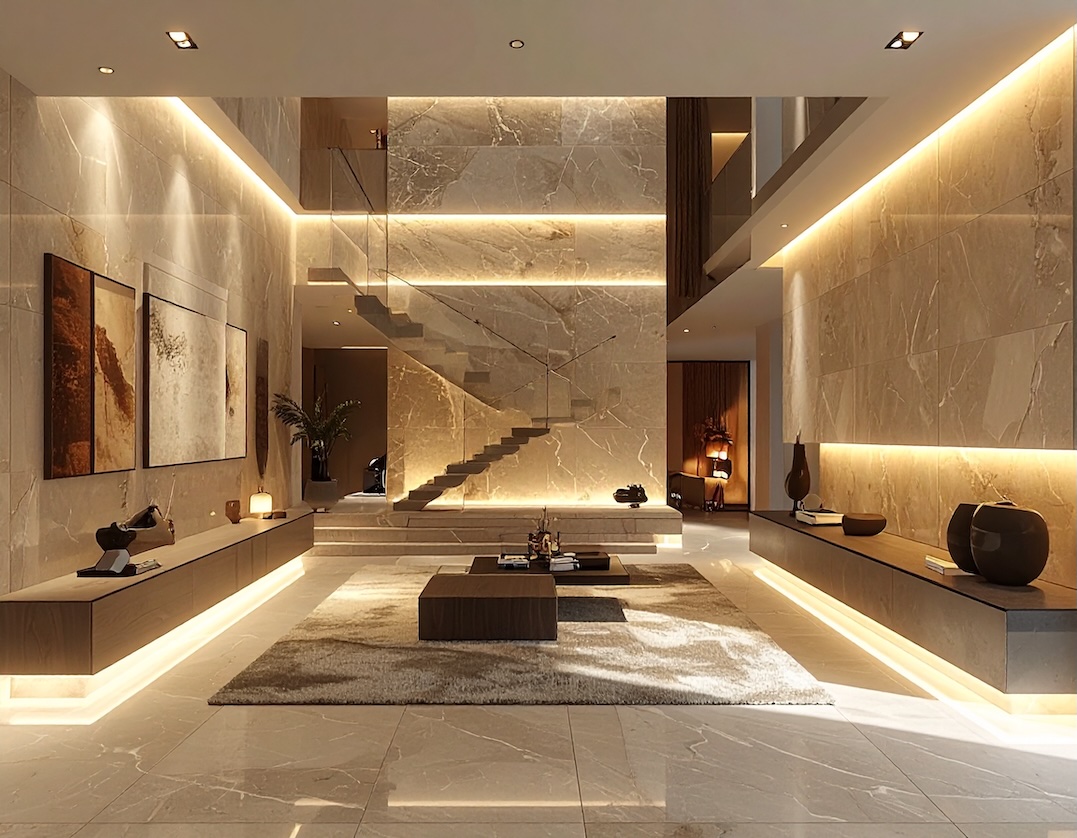
Great interior design is not only about what is placed in a space—it is about what captures attention first. Visual hierarchy is the deliberate arrangement of elements to guide the eye, and lighting is one of the most powerful tools designers use to achieve it. In premium interiors, light acts as an invisible curator, directing focus, shaping perception, and influencing how a space is experienced.
1. Creating Focal Gravity
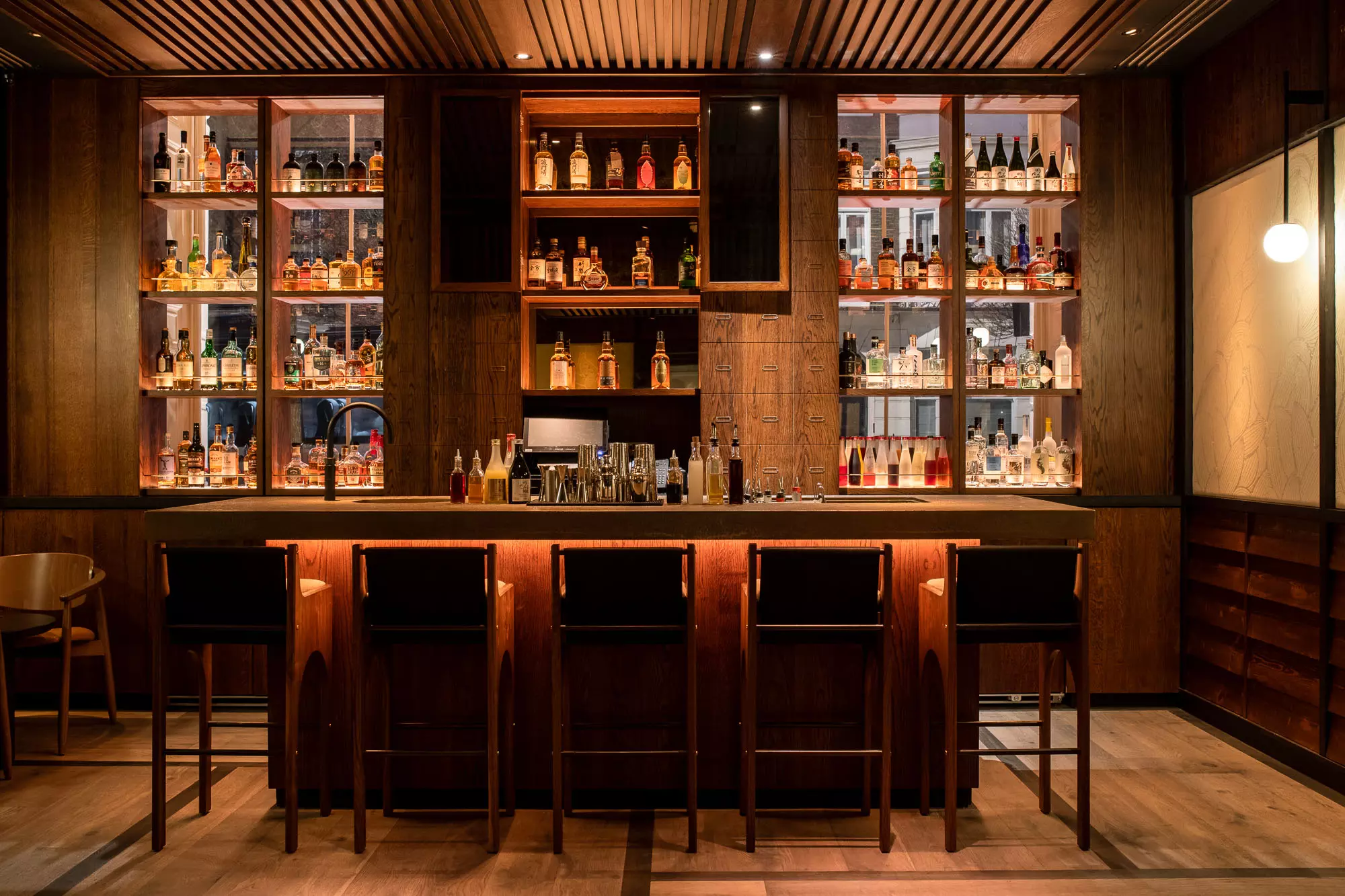
Designers often use concentrated lighting to establish visual anchors within a room. A sculptural staircase, textured feature wall, or bespoke artwork becomes more compelling when illuminated with higher contrast than its surroundings. The eye naturally gravitates toward the brightest point in a visual field.
2. Layering Attention Through Light Intensity
Not all illumination is meant to be equal. By varying light levels across a space, designers create a hierarchy of importance. Primary zones receive stronger illumination, while secondary areas remain subtly lit, allowing spaces to feel organized rather than visually overwhelming.
3. Revealing Material Depth
Strategic grazing and wall-washing techniques highlight the texture of stone, timber, metal, and handcrafted finishes. This selective emphasis elevates premium materials and ensures architectural details are noticed without relying on decorative excess.
4. Controlling Sightlines and Movement
Lighting can quietly influence circulation. Designers often illuminate pathways, transitions, and destination points to encourage intuitive movement through a home or workplace, creating a seamless spatial experience.
Looking Ahead
As interiors become increasingly minimal, lighting is taking on a larger role in defining hierarchy and character. The most successful spaces use light not merely for visibility, but as a design language that guides attention, enhances architecture, and creates memorable experiences.
 Chat with us now!
