

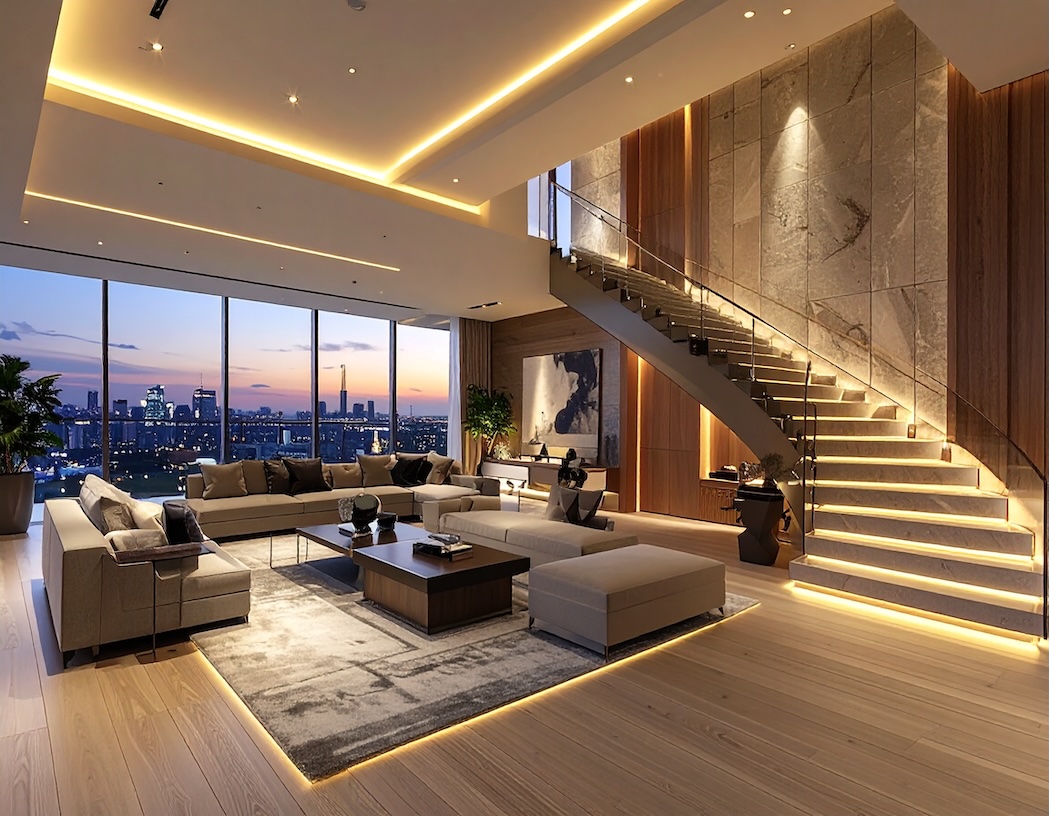
Luxury in interior design is rarely defined by expensive materials alone. In the most refined homes, lighting is often the invisible element that elevates ordinary spaces into extraordinary experiences. As luxury residential design evolves in 2026, the focus is shifting from decorative fixtures to strategic lighting that enhances architecture, materials, and emotional comfort.
1. Layered Illumination Creates Visual Depth
High-end homes use multiple layers of light to create dimension rather than relying on a single source. Ambient, task, accent, and architectural lighting work together to highlight textures, define volumes, and create a richer spatial experience. The result is a home that feels curated rather than simply well-lit.
2. Shadow Design as a Luxury Element
True luxury lighting is not about brightness—it is about contrast. Carefully controlled shadows add mystery, depth, and sophistication. Designers increasingly use concealed lighting and directional illumination to create dramatic visual moments that reveal architecture gradually.
3. Material Enhancement Through Light
Natural stone, textured veneers, handcrafted metals, and bespoke finishes appear significantly more premium when illuminated correctly. Grazing light across surfaces reveals craftsmanship and material authenticity that often remains unnoticed under conventional lighting.
4. Circadian-Based Lighting Experiences
Affluent homeowners are embracing lighting systems that shift throughout the day to support wellbeing. Warmer evening tones and cooler daytime settings create environments that feel naturally aligned with human rhythms, enhancing comfort and luxury simultaneously.
5. Architectural Lighting Over Decorative Statements
The most sophisticated homes are moving away from oversized chandeliers as the primary focal point. Instead, integrated lighting within ceilings, joinery, staircases, and niches creates a seamless, gallery-like atmosphere where architecture itself becomes the feature.
Looking Ahead
The future of luxury lighting lies in subtlety. Homes that feel truly exceptional are not necessarily brighter—they are more thoughtfully illuminated. By shaping perception, highlighting craftsmanship, and creating emotional resonance, lighting transforms a house from a collection of beautiful objects into a deeply immersive living experience.
 Chat with us now!
