

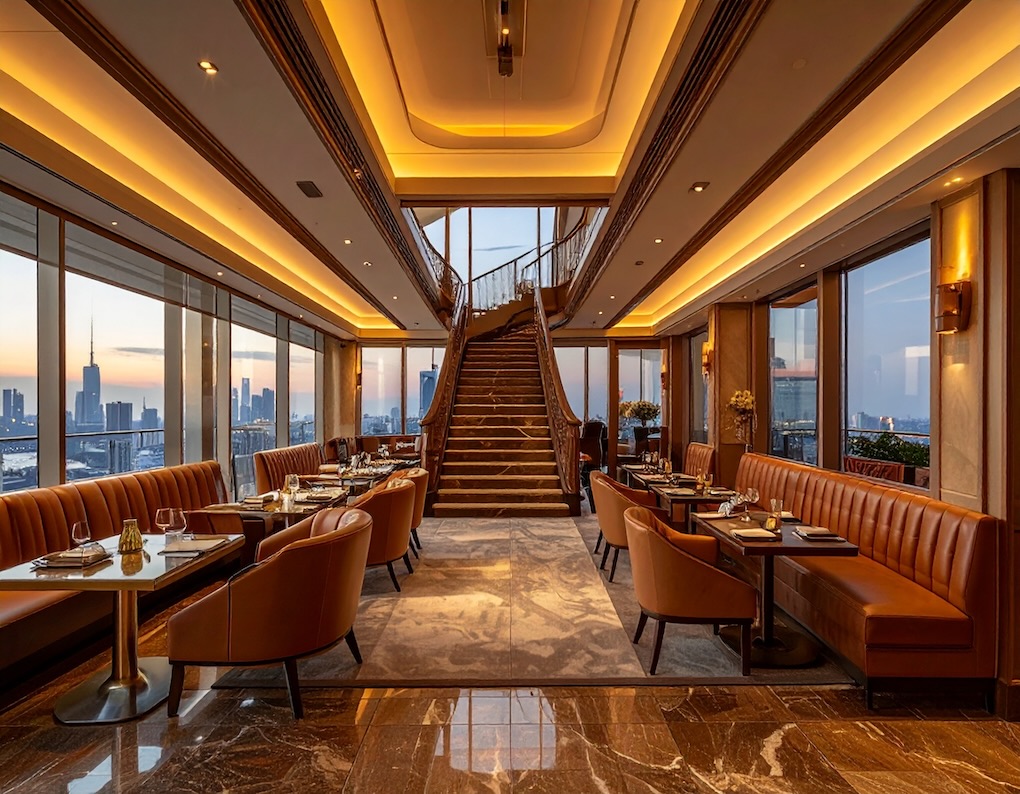
Restaurant interior design plays a critical role in shaping customer loyalty, repeat visits, and long-term brand perception. In 2026, successful hospitality businesses are recognizing that customer retention is influenced not only by food quality and service but also by the overall spatial experience. The focus has shifted from creating visually appealing interiors to designing environments that encourage emotional connection and repeat engagement.
1. Spatial Memory and Brand Recall
Distinctive interior elements help create memorable experiences that customers associate with a restaurant's identity. Unique architectural features, material palettes, and signature design moments strengthen brand recall and increase the likelihood of repeat visits.
2. Comfort-Driven Dwell Time
Customer retention is closely linked to how comfortable guests feel within a space. Thoughtfully designed seating, balanced lighting, acoustic control, and appropriate spatial density encourage longer visits and more positive dining experiences.
3. Experience Consistency Across Every Visit
Successful restaurants create predictable yet enjoyable experiences through consistent design language. Guests are more likely to return when the atmosphere, comfort levels, and spatial quality remain reliable over time.
4. Social Sharing Through Environmental Design
Modern diners often become brand ambassadors through social media. Carefully curated focal points, architectural lighting, and visually engaging spaces encourage organic content creation, increasing visibility while reinforcing customer loyalty.
5. Emotional Connection Through Atmosphere
The most effective restaurant interiors create emotional responses that extend beyond the meal itself. Material selection, lighting, scent integration, and spatial sequencing contribute to an environment that customers want to revisit.
Looking Ahead
The most successful restaurant interiors balance aesthetics, comfort, and emotional engagement. Businesses that invest in experience-driven design are creating environments that strengthen customer retention, encourage repeat visits, and build lasting brand loyalty. In today's hospitality market, interior design has become a powerful customer retention strategy rather than simply a visual enhancement.
 Chat with us now!
