

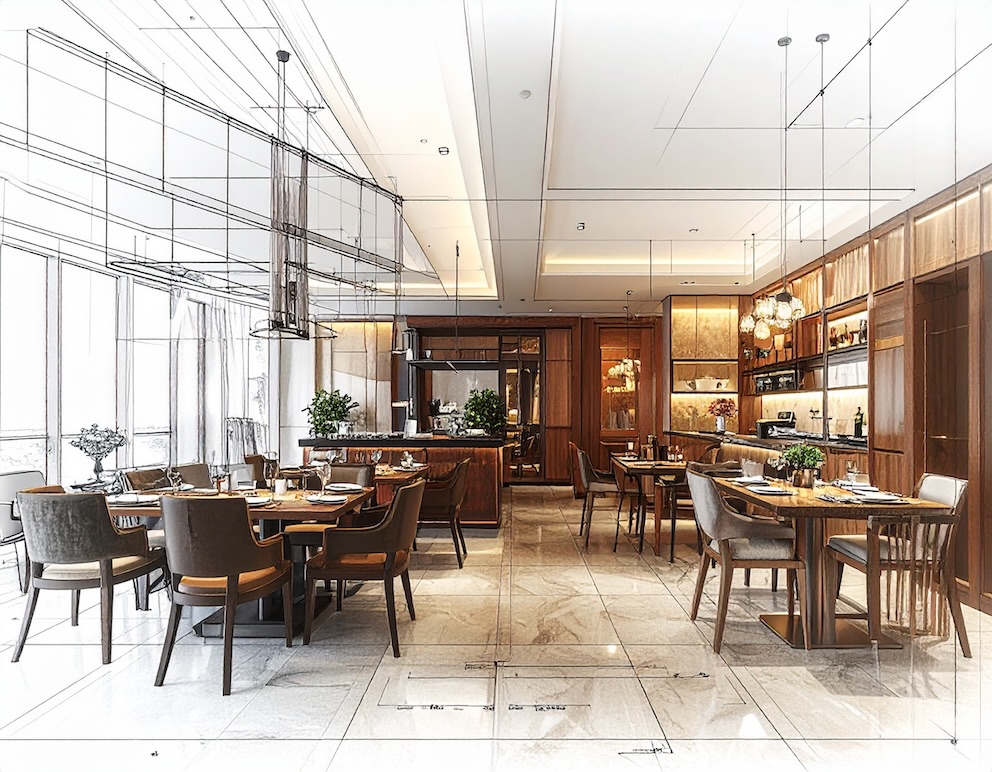
A successful restaurant fit-out is not simply about creating an attractive space—it is about investing in the elements that directly influence operations, customer experience, and long-term profitability. The most successful hospitality projects allocate budgets strategically rather than evenly across all design components.
1. Prioritize Revenue-Generating Zones
Not every square foot contributes equally to revenue. Entry experiences, dining areas, bar counters, and open kitchens often have the greatest impact on customer perception and spending behavior. Investing in these high-visibility zones creates a stronger return than overspending on back-of-house aesthetics.
2. Budget for Operational Flow Before Decor
Many restaurant owners underestimate the value of workflow planning. Kitchen circulation, service routes, pickup counters, and staff movement patterns directly affect service speed. Allocating budget toward efficient layouts can improve operational performance long after opening day.
3. Invest in Acoustic Comfort
One of the most overlooked fit-out expenses is sound management. Excessive noise reduces guest comfort and shortens dwell time. Strategic spending on acoustic ceilings, wall treatments, and sound-absorbing finishes often delivers a better customer experience than additional decorative features.
4. Design for Future Menu Evolution
Restaurants frequently evolve their offerings within the first few years. Flexible kitchen infrastructure, adaptable service stations, and scalable utility provisions help avoid costly renovations later.
5. Reserve a Contingency for Compliance
Licensing requirements, fire safety upgrades, ventilation modifications, and utility enhancements often emerge during execution. Setting aside a dedicated contingency budget helps prevent compromises to design quality.
Looking Ahead
The most successful restaurant interiors balance aesthetics, efficiency, and adaptability. Strategic budget allocation ensures that every investment supports customer experience, operational excellence, and long-term business growth rather than simply creating visual appeal.
 Chat with us now!
