

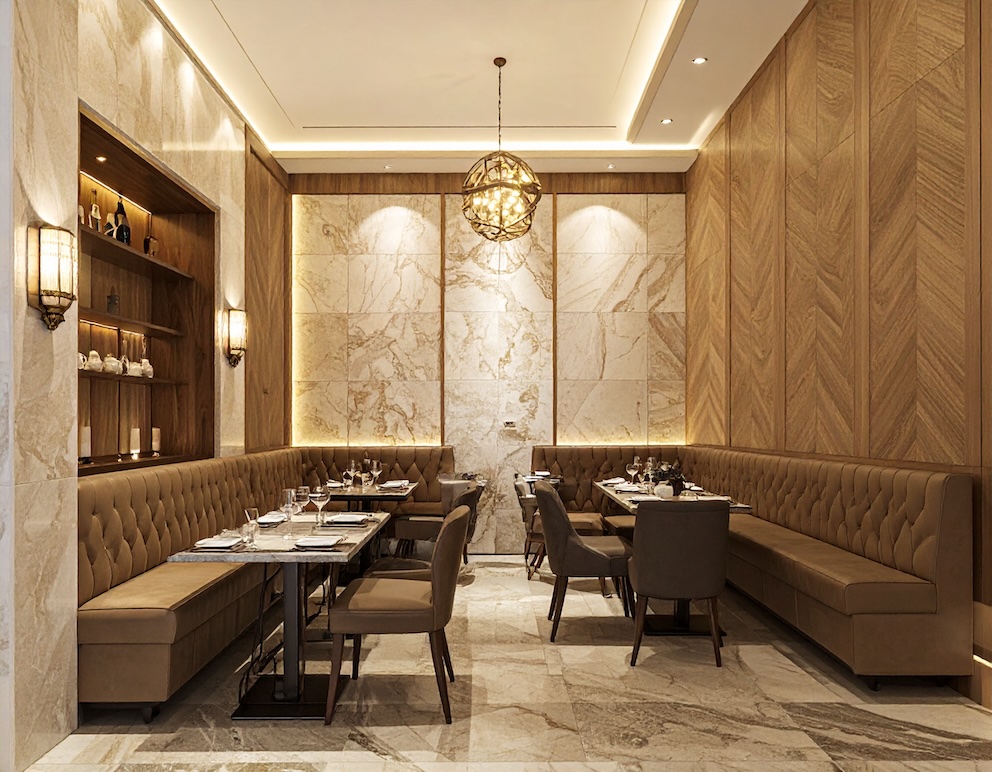
Luxury in restaurant design is often communicated before the first dish reaches the table. While lighting and layout play a role, carefully selected materials create the sensory cues that define exclusivity. Today’s high-end restaurants are moving beyond obvious luxury finishes and embracing materials that create depth, authenticity, and memorable guest experiences.
1. Honed Natural Stone Instead of High-Gloss Surfaces
Premium dining spaces increasingly favor honed marble, limestone, and travertine over polished finishes. The softer texture absorbs light rather than reflecting it, creating a sophisticated atmosphere that feels understated and timeless rather than overtly extravagant.
2. Patinated Metals That Age Gracefully
Brass, bronze, and blackened steel are being specified for their ability to develop character over time. Unlike pristine finishes, naturally aging metals introduce a sense of permanence and craftsmanship that guests subconsciously associate with established luxury.
3. Acoustic Luxury Through Soft Architectural Materials
Exclusive restaurants understand that sound influences perceived value. Upholstered wall panels, textured fabrics, leather surfaces, and timber slat installations help create quieter dining environments where conversations feel more private and intimate.
4. Bookmatched Veneers and Rare Timber Grains
Instead of standard wood finishes, luxury venues often use carefully selected veneers with mirrored grain patterns. These bespoke surfaces create visual continuity and a level of detail that signals design intentionality.
5. Handcrafted Materials with Visible Imperfections
Handmade ceramic tiles, artisanal plaster finishes, and handcrafted stonework introduce subtle variations that cannot be replicated by mass-produced materials. These imperfections create authenticity, making spaces feel curated rather than manufactured.
Looking Ahead
The most exclusive restaurants today rely less on obvious opulence and more on material storytelling. When thoughtfully specified, materials create atmosphere, elevate guest perception, and transform dining spaces into experiences worth returning to.

 Chat with us now!
