

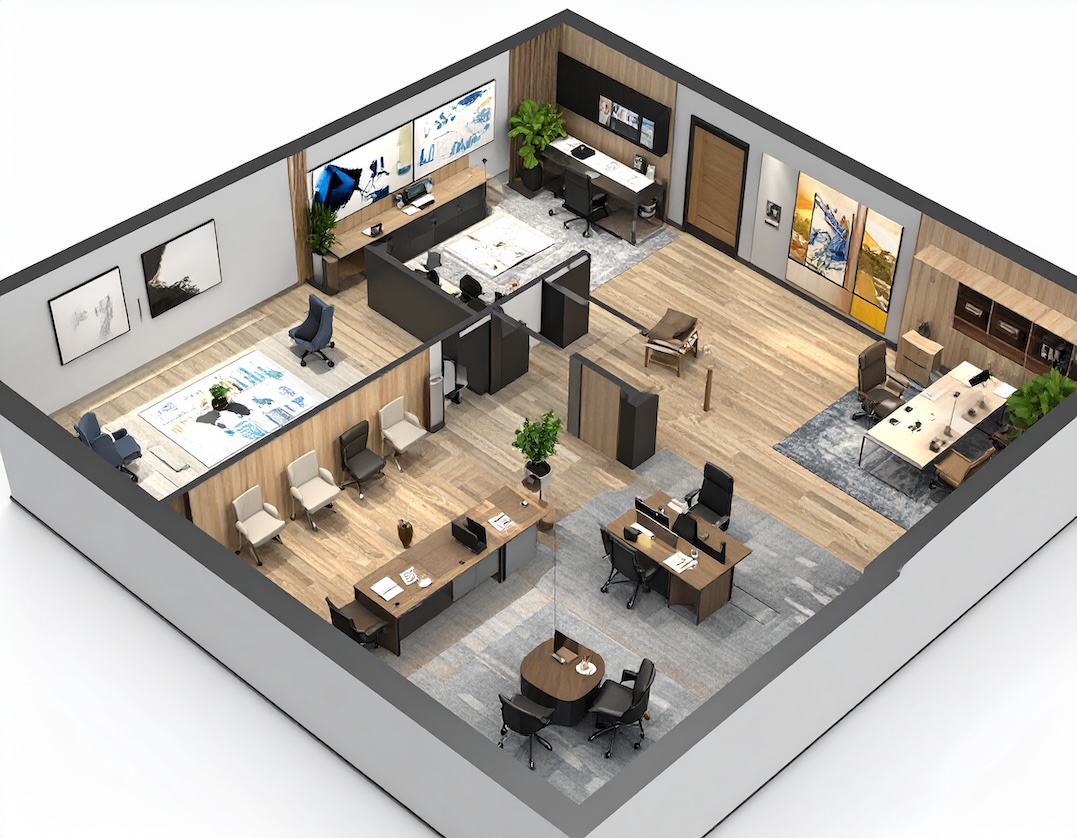
A successful corporate office interior begins long before materials are selected or construction starts. In 2026, businesses are increasingly recognizing that budget planning is not simply about controlling costs—it is about making strategic investment decisions that influence productivity, scalability, employee experience, and long-term operational efficiency. The most successful workplace projects align financial planning with business objectives from the very first day.
1. Allocate Budget Based on Business Functions
Instead of dividing costs by departments, leading organizations are budgeting according to workplace activities. Collaboration zones, focus areas, client-facing spaces, and leadership suites often require different levels of investment based on their impact on business performance.
2. Account for Technology Infrastructure Early
One of the most overlooked expenses in office fit-outs is technology integration. Smart meeting rooms, occupancy sensors, acoustic systems, server requirements, and future-ready cabling should be considered during the planning stage to avoid expensive retrofits later.
3. Evaluate Lifecycle Cost, Not Purchase Cost
A lower upfront investment does not always translate to savings. Durable flooring, high-performance lighting, ergonomic furniture, and quality finishes often reduce maintenance, replacement, and operational expenses over the life of the workplace.
4. Plan for Growth and Reconfiguration
Businesses evolve quickly. Designing modular workstations, adaptable meeting spaces, and flexible infrastructure helps reduce future renovation costs while allowing the office to scale alongside organizational growth.
5. Reserve Budget for Hidden Project Variables
Building approvals, landlord compliance requirements, HVAC modifications, acoustic treatments, and power upgrades are often underestimated. Creating a contingency allocation from the outset protects project timelines and prevents budget overruns.
Looking Ahead
The most effective office interiors are not necessarily the most expensive—they are the most intelligently planned. Organizations that approach budgeting strategically from day one create workplaces that support business growth, employee wellbeing, and operational efficiency while delivering stronger long-term value.
 Chat with us now!
