

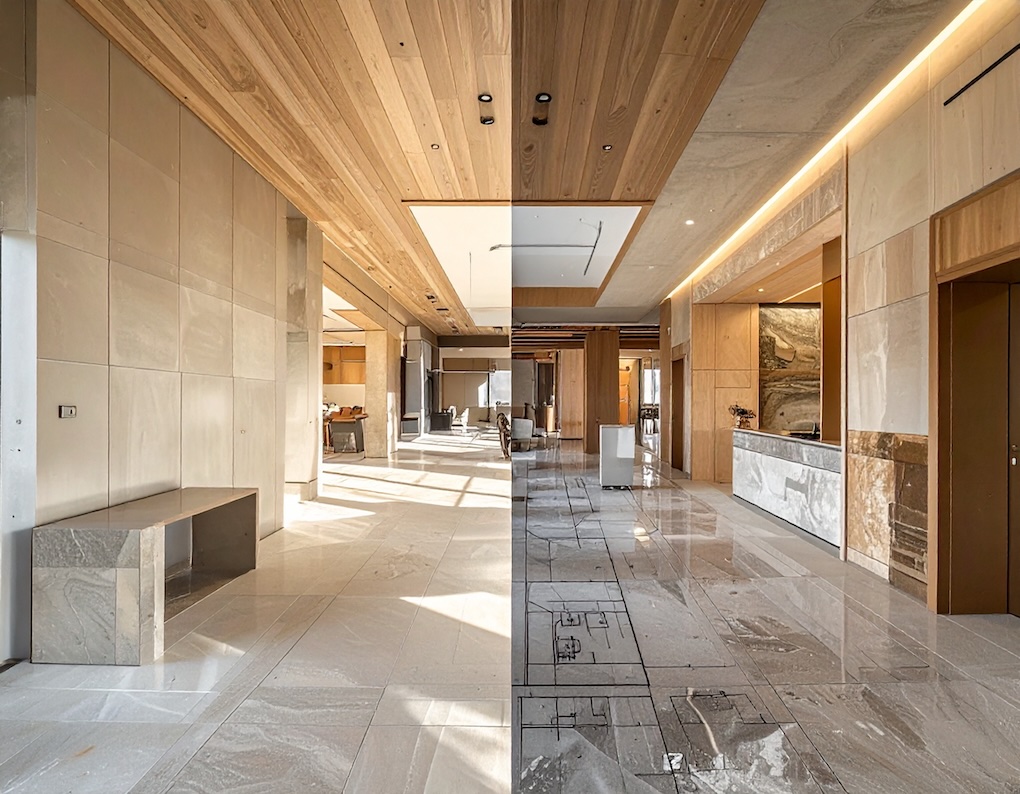
Material selection is often viewed as a design decision, but material specification is fundamentally a business decision. While cost-saving substitutions may appear beneficial during procurement, poorly specified materials can create long-term operational, financial, and reputational challenges. In modern commercial and hospitality interiors, the true cost of a material is rarely reflected in its purchase price alone.
1. Performance Mismatch Across User Density
A material that performs well in a low-traffic environment may fail prematurely in high-occupancy spaces. Flooring, wall finishes, and furniture surfaces that are not specified according to actual usage patterns often require early replacement, resulting in unexpected lifecycle costs and business disruption.
2. Inconsistent Ageing and Visual Degradation
Not all materials wear uniformly. Poor specification can lead to surfaces ageing at different rates, creating a patchwork appearance that makes interiors feel dated long before their intended lifespan. This affects brand perception, particularly in premium workplaces, retail environments, and hospitality spaces.
3. Hidden Operational Costs from Maintenance Protocols
Certain finishes require specialized cleaning products, maintenance procedures, or frequent refinishing. These ongoing operational expenses are often overlooked during project planning, significantly increasing the total cost of ownership over time.
4. Compatibility Failures Between Materials
Many interior issues arise not from individual materials but from how different materials interact. Expansion rates, moisture response, adhesive compatibility, and substrate conditions can lead to cracking, warping, staining, or premature failure when specifications are not coordinated.
5. Impact on Future Flexibility and Renovation
Poorly specified materials can make future modifications costly and complex. Materials that cannot be repaired, refinished, or integrated with future upgrades reduce adaptability and accelerate renovation cycles.
Looking Ahead
Successful interior design is not defined by selecting premium materials alone but by specifying the right materials for performance, longevity, and lifecycle value. Thoughtful material specification protects investments, enhances user experience, and ensures interiors continue performing long after project completion.
 Chat with us now!
