

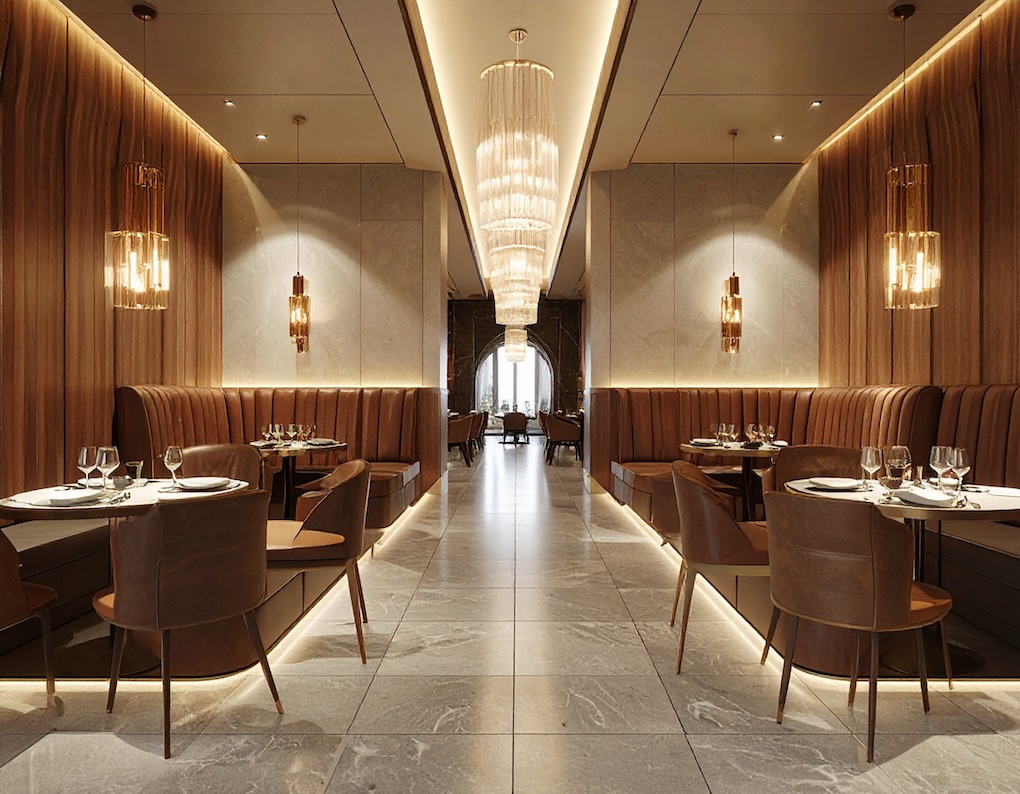
Luxury in restaurant design is rarely created by expensive materials alone. The most memorable dining environments rely on subtle design decisions that guests often feel before they consciously notice them. In today’s competitive hospitality industry, premium restaurant interiors are defined by experience, comfort, and emotional perception rather than visual extravagance.
1. Layered Acoustics Instead of Soundproofing
High-end restaurants carefully manage sound rather than eliminate it. Strategic placement of textured surfaces, upholstered seating, ceiling treatments, and acoustic panels creates a balanced soundscape where conversations remain intimate without making the space feel silent.
2. Visual Compression and Release
Premium dining spaces often use a sequence of spatial experiences. Narrow entry passages that open into larger dining areas create a sense of arrival and exclusivity. This architectural technique subtly elevates perceived value before guests even reach their table.
3. Intentional Sightline Control
Luxury restaurants choreograph what guests see from every seat. Service stations, kitchen access points, and operational zones are concealed, while focal views are directed toward feature lighting, curated artwork, or signature design moments.
4. Material Transition Detailing
The most sophisticated interiors pay attention to where materials meet. Seamless transitions between stone, timber, metal, and upholstery create a refined visual rhythm that signals craftsmanship and quality without demanding attention.
5. Ambient Layering Beyond Lighting
Premium environments engage multiple senses simultaneously. Subtle scent zoning, controlled temperature gradients, tactile table finishes, and carefully selected background music work together to create an immersive hospitality experience.
Looking Ahead
As restaurant design evolves, luxury is becoming increasingly experiential. The most successful hospitality interiors focus on hidden design intelligence rather than obvious opulence. By refining acoustics, circulation, sightlines, detailing, and sensory engagement, restaurants can create premium experiences that guests remember long after the meal has ended.
 Chat with us now!
