

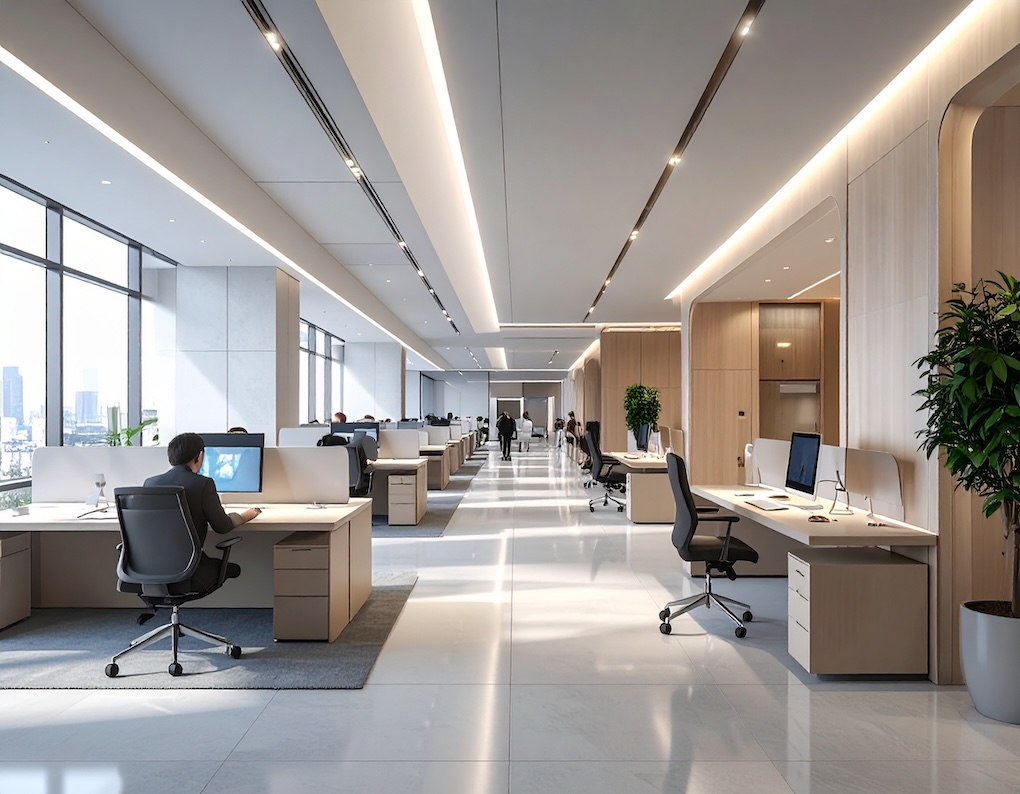
For decades, workplace productivity was measured by output, efficiency, and utilization rates. Today, a new metric is emerging: cognitive energy. Forward-thinking organizations are recognizing that every unnecessary decision employees make throughout the day consumes mental resources that could be directed toward higher-value work. As a result, office design is increasingly focused on reducing decision fatigue through intentional workplace environments.
1. Cognitive Navigation Over Wayfinding
Poorly organized offices force employees to make hundreds of micro-decisions daily—from locating meeting rooms to finding available workstations. Intuitive spatial layouts, visual landmarks, and predictable circulation paths reduce cognitive load and create frictionless workplace experiences.
2. Environmental Consistency Zones
Frequent changes in lighting, acoustics, and temperature require the brain to constantly adapt. High-performing workplaces are creating environmental consistency zones where sensory conditions remain stable, allowing employees to maintain deeper focus for longer periods.
3. Choice Architecture for Work Settings
More options do not always improve productivity. Instead of offering endless workspace choices, organizations are curating a limited number of purpose-driven environments—focus pods, collaboration hubs, and quiet zones—making workplace decisions faster and more intuitive.
4. Visual Simplification Strategies
Excessive signage, digital displays, and visual clutter compete for attention. Simplified visual ecosystems help employees process information more efficiently while reducing subconscious mental fatigue throughout the workday.
5. Predictive Workplace Design
AI-enabled workplace systems are beginning to anticipate employee needs by automating lighting preferences, room bookings, and environmental settings, eliminating routine decisions and preserving mental bandwidth.
Looking Ahead
The future of workplace design is not simply about helping people work harder—it is about helping them think better. Offices that reduce decision fatigue create environments where cognitive resources are protected, enabling stronger focus, faster problem-solving, and more sustainable productivity.
 Chat with us now!
