

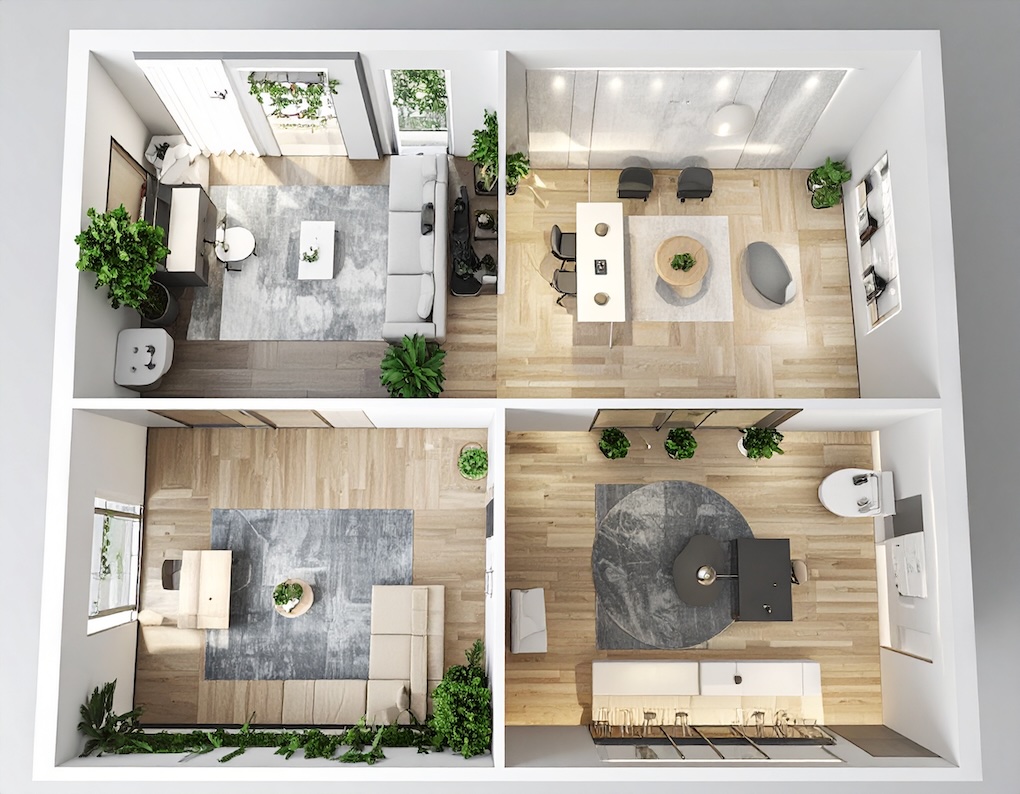
As workplace expectations evolve, office design is moving beyond aesthetics and functionality toward a deeper understanding of human cognition. Cognitive zoning is emerging as a strategic workplace design approach that aligns physical environments with the different mental states employees require throughout the day. Rather than creating uniform workspaces, organizations are designing offices that actively support focus, creativity, collaboration, and decision-making.
1. Deep Focus Territories
High-concentration tasks require environments with minimal cognitive interference. Modern offices are incorporating acoustically insulated focus zones, visual privacy screens, and distraction-controlled layouts that help employees sustain attention for longer periods and reduce mental fatigue.
2. Transition Spaces for Cognitive Reset
One of the most overlooked aspects of workplace design is the mental transition between tasks. Dedicated decompression corridors, micro-lounges, and movement-oriented pathways allow employees to reset their attention before switching between collaborative and analytical work modes.
3. Decision-Making Environments
Research increasingly shows that environmental conditions influence judgement quality. Executive zones, strategy rooms, and meeting spaces are being designed with controlled lighting, balanced sensory inputs, and reduced visual clutter to support clearer thinking and more effective decision-making.
4. Creativity Activation Zones
Innovation rarely happens at a workstation. Flexible brainstorming areas, varied seating arrangements, writable surfaces, and spatial unpredictability encourage divergent thinking and spontaneous idea generation.
5. Neuro-Adaptive Workplace Planning
Advanced workplace strategies are beginning to map employee work patterns and cognitive demands rather than simply allocating square footage. This data-driven approach creates environments that better support productivity, wellbeing, and overall workplace performance.
Looking Ahead
The future of office design lies in understanding how people think, not just how they work. Organizations that embrace cognitive zoning are creating workplaces that enhance focus, accelerate collaboration, and deliver measurable improvements in employee performance and experience.
 Chat with us now!
