

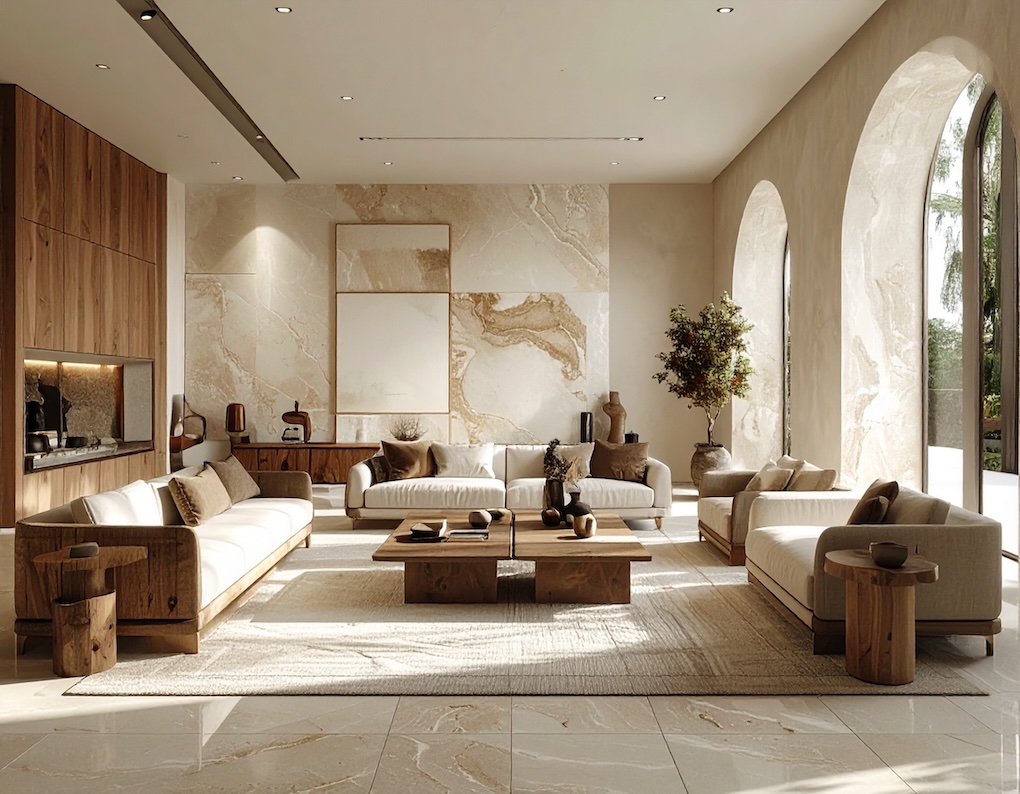
While design trends evolve rapidly, certain materials continue to remain relevant across generations, architectural styles, and changing lifestyles. Their longevity is not simply a matter of aesthetics—it is rooted in performance, adaptability, and the way they age over time. In contemporary interior design, timeless materials provide a foundation that remains elegant long after trends fade.
1. Natural Stone That Develops Character
Materials such as marble, travertine, and limestone are valued not because they remain unchanged, but because they mature gracefully. Subtle wear patterns, natural veining, and surface patina add depth and authenticity, allowing spaces to feel richer with age rather than dated.
2. Solid Wood with Visible Grain
Unlike highly processed finishes, solid timber retains a visual connection to nature. Oak, walnut, and teak continue to be preferred because their grain patterns introduce warmth, texture, and individuality that cannot be replicated by synthetic alternatives.
3. Metals That Patinate Rather Than Deteriorate
Brass, bronze, and copper remain enduring choices because they evolve visually over time. Their changing surface tones create a sense of permanence and craftsmanship, making them particularly effective in hospitality, residential, and workplace interiors.
4. Textured Materials That Engage the Senses
Timeless design is increasingly linked to tactile experience. Materials such as natural leather, handcrafted ceramics, and woven textiles introduce sensory richness that digital-age environments often lack, creating spaces that feel more human and memorable.
5. Honest Materials with Visible Imperfections
One of the strongest indicators of timelessness is material authenticity. Surfaces that reveal their natural origins, construction methods, and imperfections tend to age better than highly polished, trend-driven finishes that quickly lose relevance.
Looking Ahead
The most enduring interiors are rarely defined by fashionable colours or short-lived design trends. Instead, they rely on materials that gain character, tell stories, and improve with age. By investing in authentic, high-quality materials, designers create spaces that remain relevant, adaptable, and visually compelling for decades to come.
 Chat with us now!
