

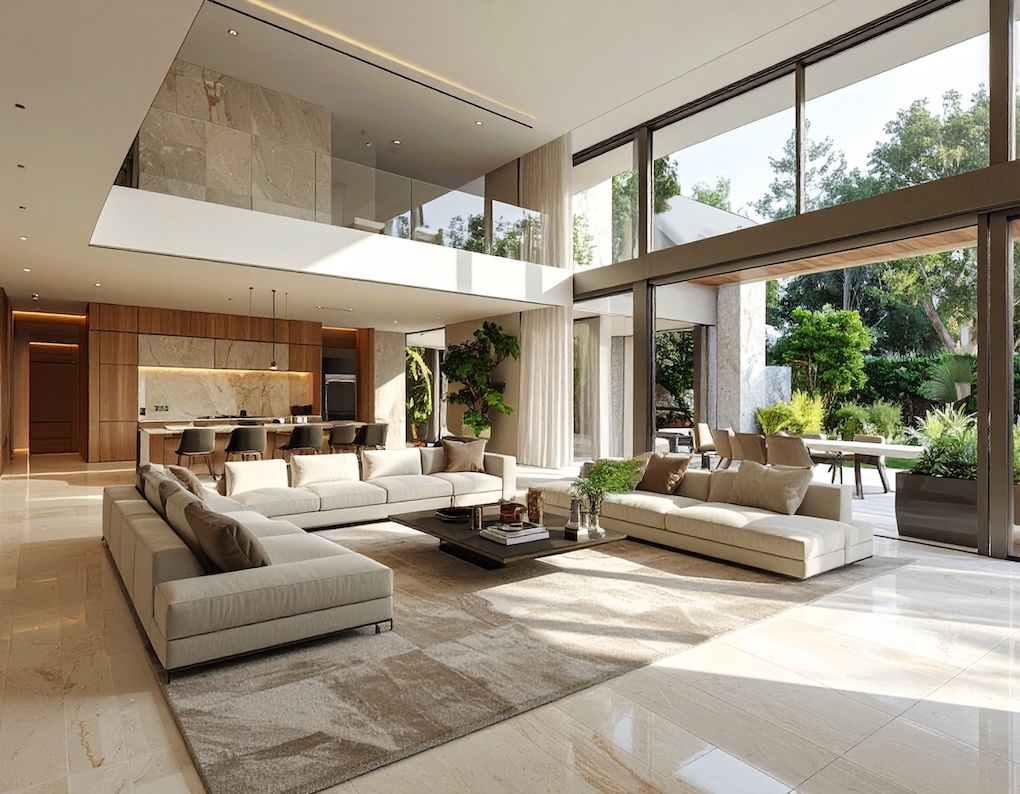
Luxury is often mistaken for expensive materials, statement furniture, or grand architectural gestures. In reality, the most memorable luxury homes feel effortless because they are designed around an invisible principle: spatial comfort. The best spaces don’t demand attention—they quietly support the way people live.
1. Visual Breathing Room
High-end homes prioritize negative space as carefully as physical objects. Strategic gaps between furniture, circulation paths, and architectural elements reduce visual noise, allowing the mind to process spaces with greater ease and calm.
2. Frictionless Movement Patterns
Luxury interiors are often planned around natural human movement rather than room dimensions. Designers study daily routines, sightlines, and transition zones to eliminate subtle inconveniences, creating spaces that feel intuitive without occupants realizing why.
3. Sensory Balance Through Material Weight
True comfort comes from balancing tactile experiences. A mix of warm woods, textured stone, soft fabrics, and matte finishes creates sensory depth without overwhelming the senses. The result is an environment that feels grounded and restorative.
4. Layered Privacy
One of the least discussed aspects of luxury design is spatial privacy. Carefully positioned corridors, buffer zones, and transitional spaces allow family members to enjoy connection and solitude simultaneously—a hallmark of sophisticated residential planning.
5. Cognitive Ease by Design
The most luxurious homes reduce mental effort. Consistent material palettes, intuitive storage integration, and visual continuity help occupants navigate spaces effortlessly, creating a sense of calm that extends beyond aesthetics.
Looking Ahead
As luxury living evolves, spatial comfort is becoming the new benchmark of sophistication. The homes that feel most exclusive are not necessarily the largest—they are the ones designed to make everyday living feel naturally effortless.
 Chat with us now!
