

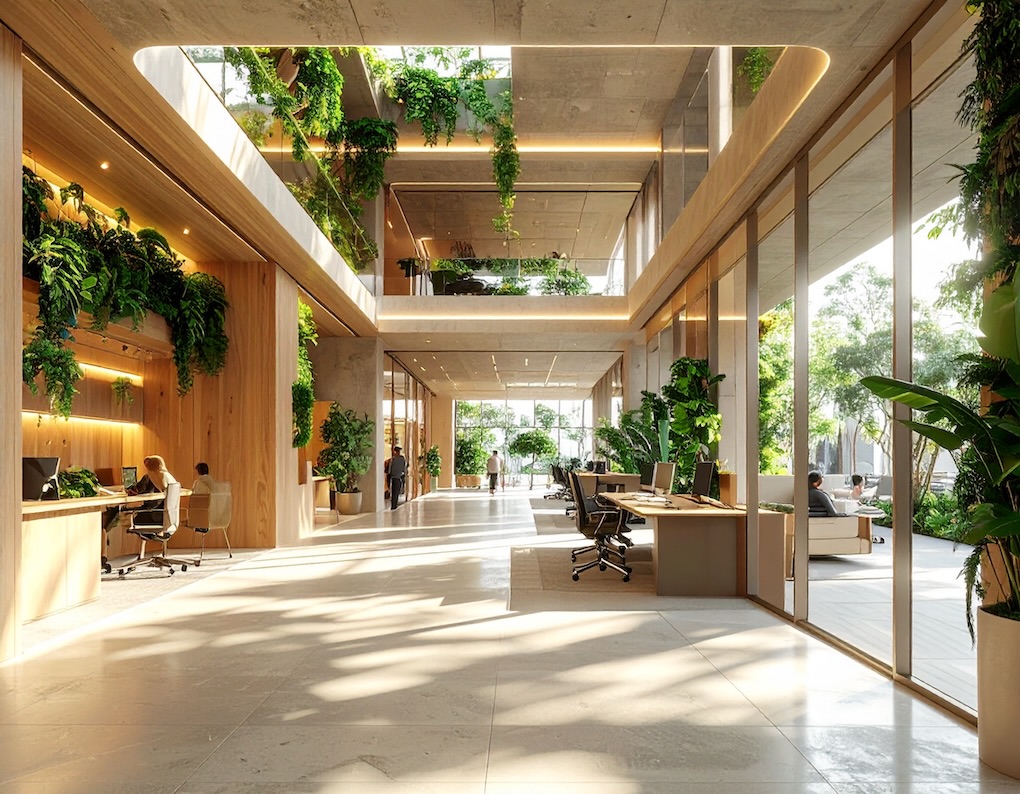
Workplace wellness has evolved far beyond ergonomic chairs and fitness programs. In 2026, leading organizations recognize that interior design plays a critical role in supporting employee wellbeing, cognitive performance, and long-term workplace satisfaction. Thoughtfully designed environments can reduce stress, improve focus, and create healthier, more resilient teams.
1. Cognitive Zoning for Mental Energy Management
Modern workplaces are being designed around how people think, not just how they work. Dedicated zones for deep focus, collaboration, learning, and social interaction help employees transition between tasks more effectively, reducing cognitive fatigue and improving productivity throughout the day.
2. Circadian Lighting Strategies
Lighting is increasingly being used to support natural biological rhythms. Dynamic lighting systems that adjust color temperature and intensity throughout the day help regulate energy levels, improve concentration, and support better sleep patterns for employees working long hours indoors.
3. Acoustic Wellness by Design
Noise remains one of the most overlooked workplace stressors. Thoughtful acoustic planning—including sound-absorbing materials, privacy pods, and strategic space layouts—creates environments that minimize distractions while supporting both collaboration and focused work.
4. Sensory Comfort Beyond Visual Design
Wellness-focused offices are paying greater attention to subtle sensory experiences. Air quality, tactile materials, scent-neutral environments, and thermal comfort all contribute to creating spaces that feel healthier, calmer, and more supportive of employee wellbeing.
5. Movement-Integrated Work Environments
Rather than encouraging employees to remain stationary, modern offices are designed to promote natural movement throughout the day. Distributed amenities, walking routes, flexible work settings, and adaptable furniture encourage healthier activity patterns without disrupting workflow.
Looking Ahead
The future of workplace wellness lies in designing environments that actively support human performance. Organizations that invest in thoughtful interior design are creating workplaces that enhance wellbeing, strengthen employee engagement, and foster a healthier, more productive workforce. Wellness-driven design is no longer an employee perk—it is becoming a strategic business advantage.
 Chat with us now!
