
At Blucap Interiors, we have always believed that dining is never just about what arrives on the plate. Long before food is served, the space has already begun shaping the experience—guiding anticipation, calming the mind, and quietly preparing the senses. Taste, as we see it, is multisensory, influenced as much by proportion, light, and enclosure as by cuisine itself.
Across the restaurant and café environments we design, we repeatedly observe the same phenomenon: identical food can feel indulgent in one setting and unexpectedly muted in another. This difference is rarely accidental. It is architecture at work—subtle, deliberate, and largely invisible.
Ceiling Height and the Emotional Pace of Dining
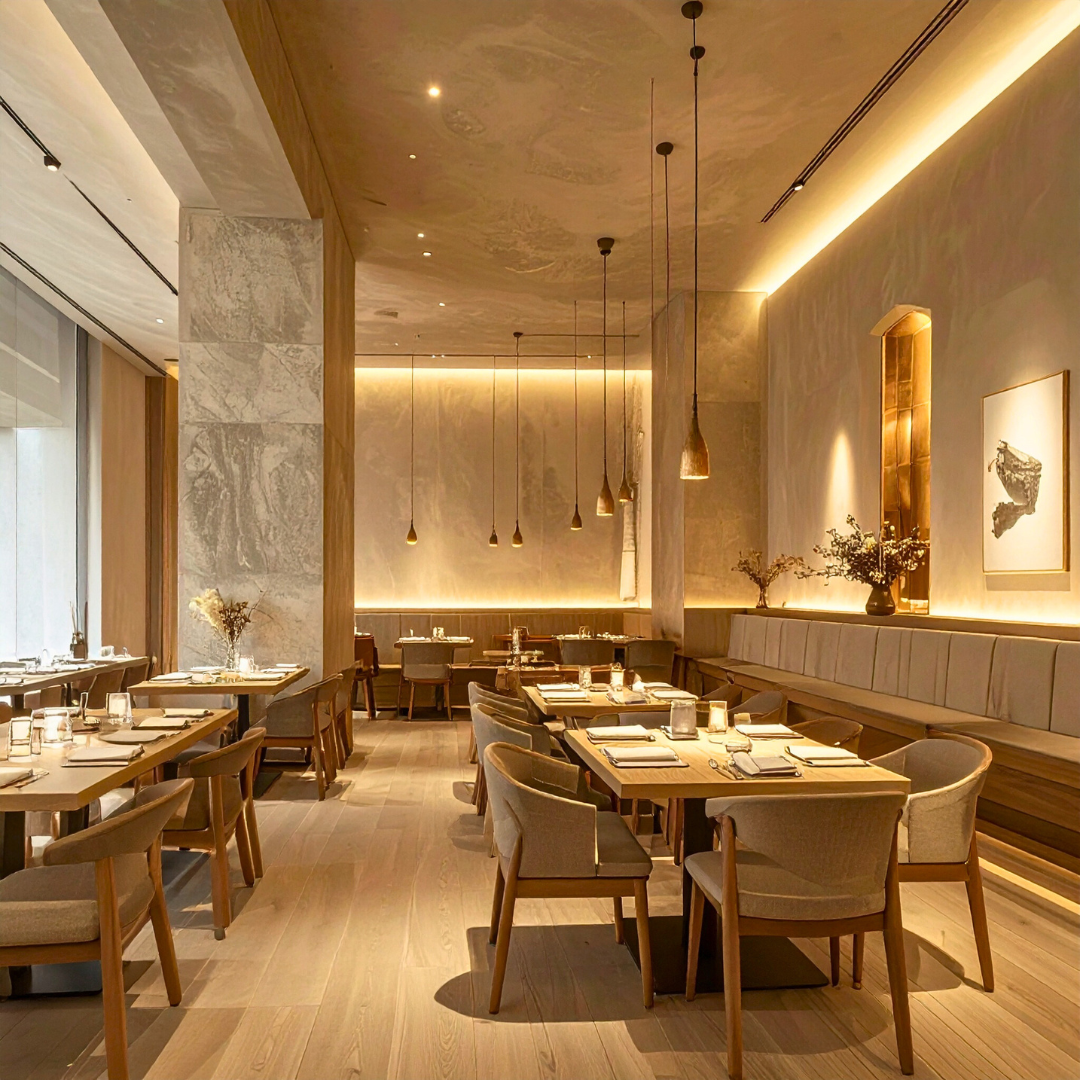
At Blucap Interiors, ceiling height is treated as an emotional instrument rather than a neutral plane. Lower volumes naturally draw attention inward, encouraging diners to slow down, focus on the table, and engage more deeply with flavour and conversation.
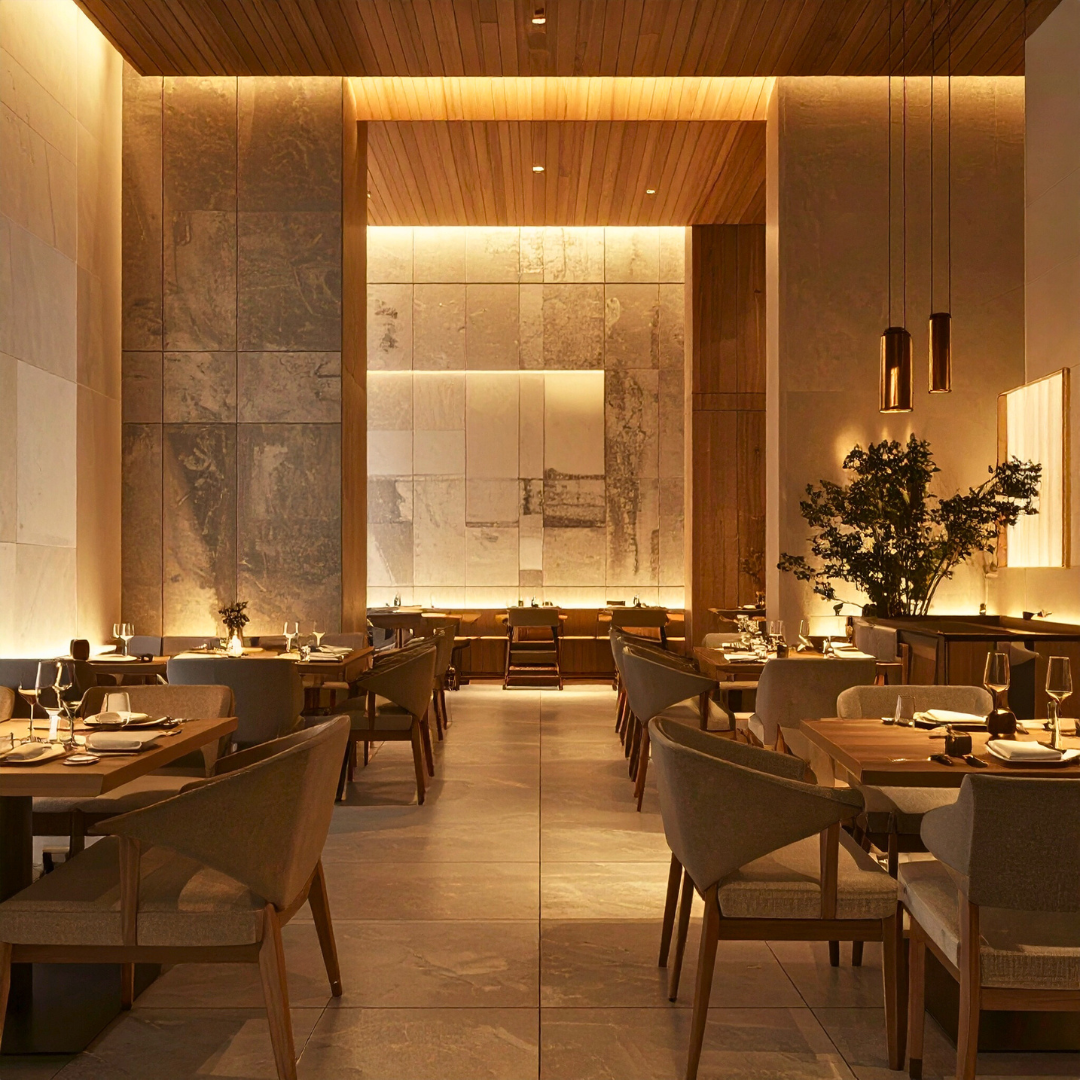
When we work with taller volumes, the emotional response shifts. Space feels lighter, more expansive, and more energetic. Dining often feels quicker—not because guests are rushed, but because the architecture encourages movement and flow. Aligning ceiling height with the nature of the cuisine and the intended dining rhythm remains a conscious design decision.
Enclosure, Comfort, and Sensory Focus
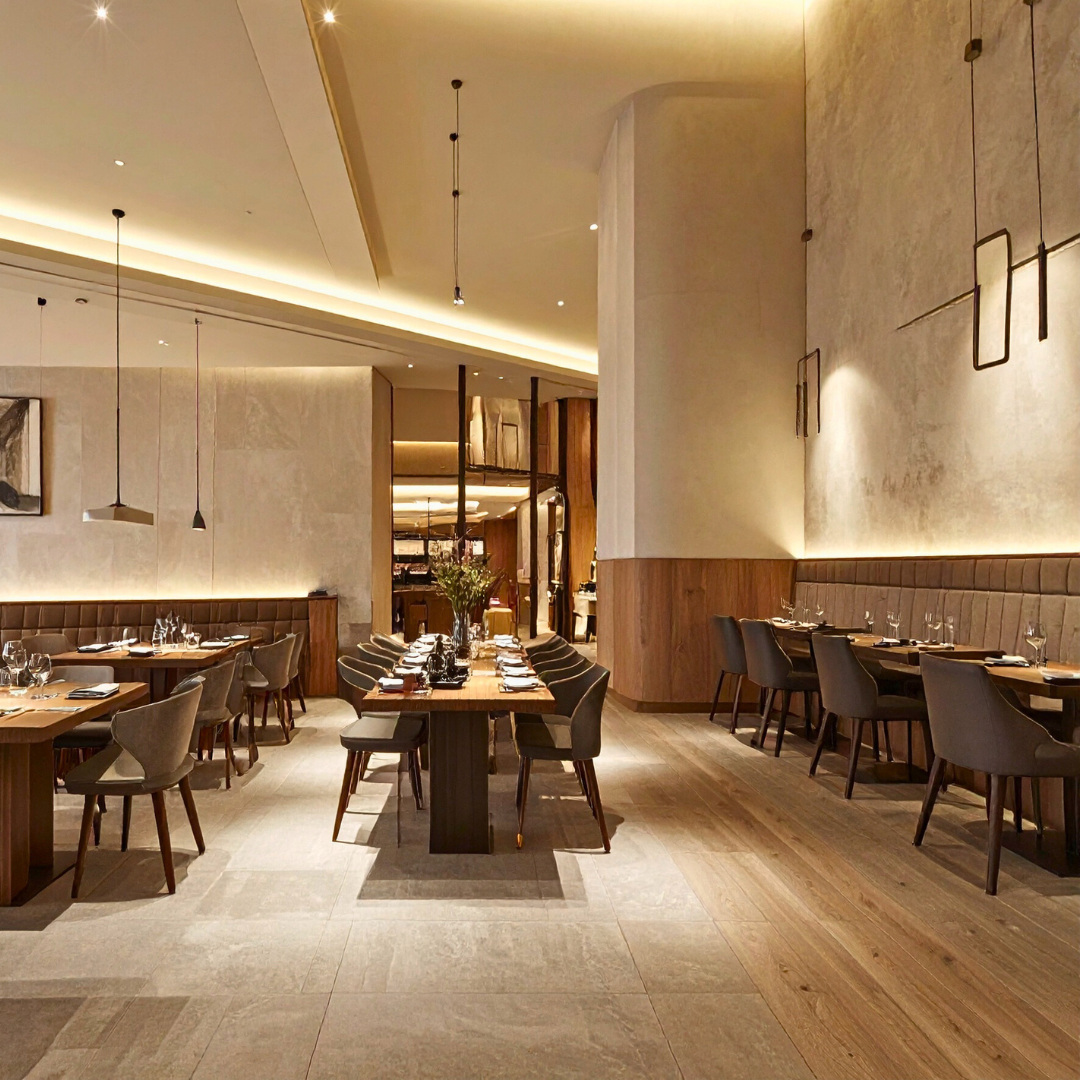
In our hospitality work at Blucap Interiors, comfort is understood as a prerequisite for taste. While open dining rooms may appear visually impressive, excessive openness often disperses attention. When diners feel exposed, the body remains alert, and sensory focus weakens.
This is why enclosure is introduced with intention. Booth seating, curved partitions, and layered spatial planning act as psychological tools rather than decorative gestures. When guests feel subtly protected without feeling confined, the body relaxes—and as it does, the palate becomes more receptive.
Lighting Contrast and the Experience of Food
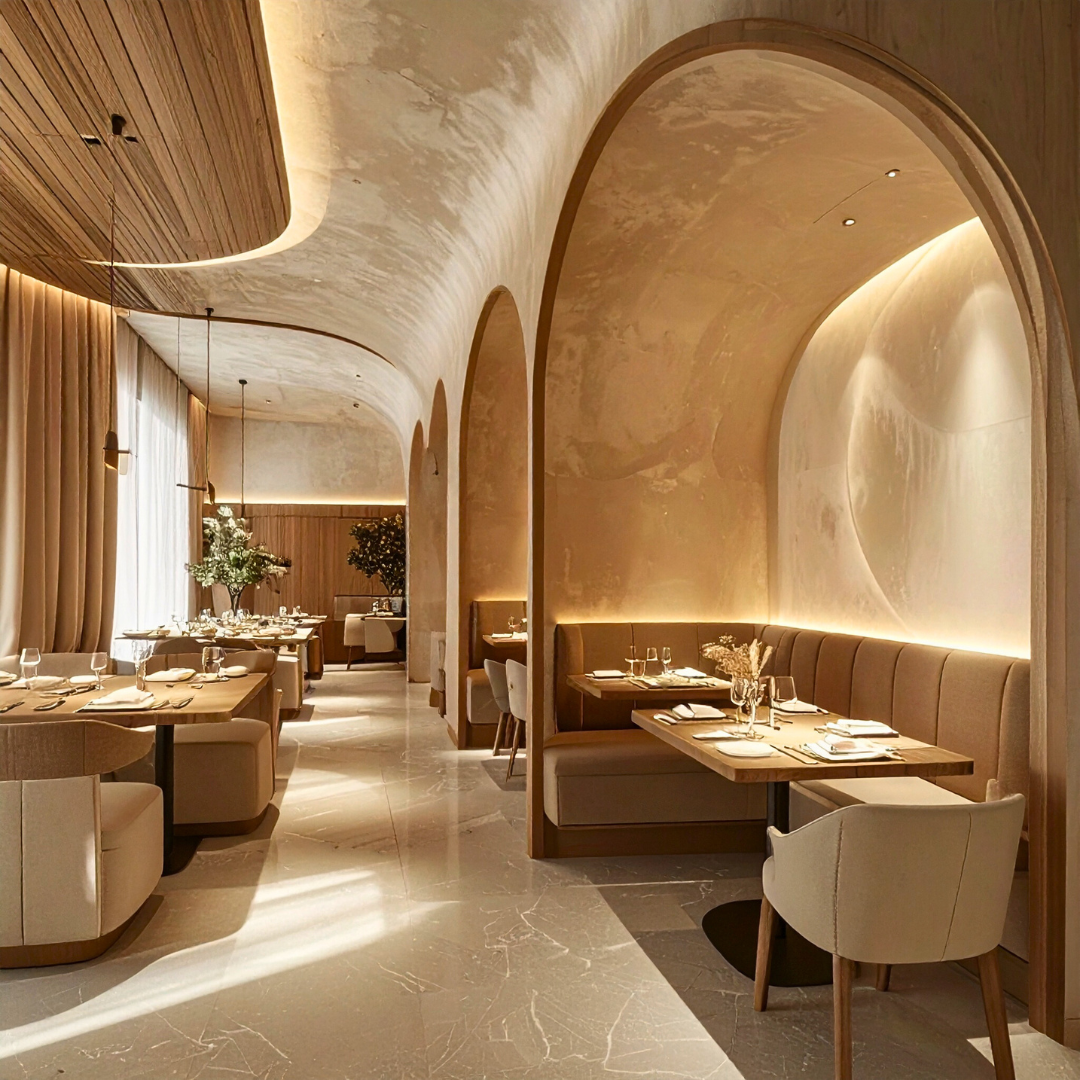
Lighting decisions at Blucap Interiors are guided by hierarchy rather than brightness. Uniform illumination may feel efficient, but it flattens perception. We rely instead on contrast—bringing clarity and focus to the table while allowing the surrounding environment to soften and recede.
This hierarchy directs attention naturally. When the eye is not overstimulated by its surroundings, food feels more dimensional and intentional. Used with restraint, lighting becomes a silent collaborator in the dining experience.
Materiality and Sensory Temperature
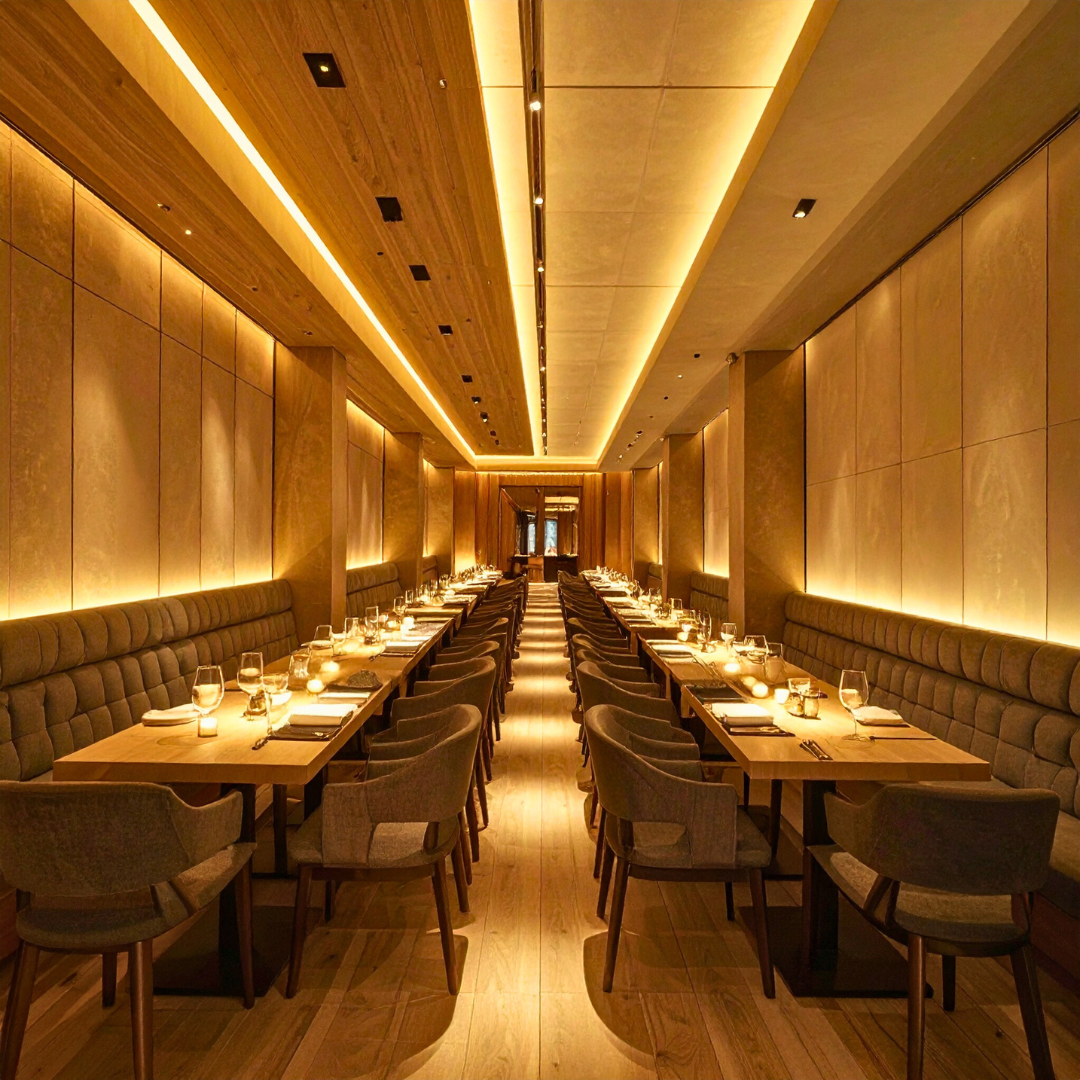
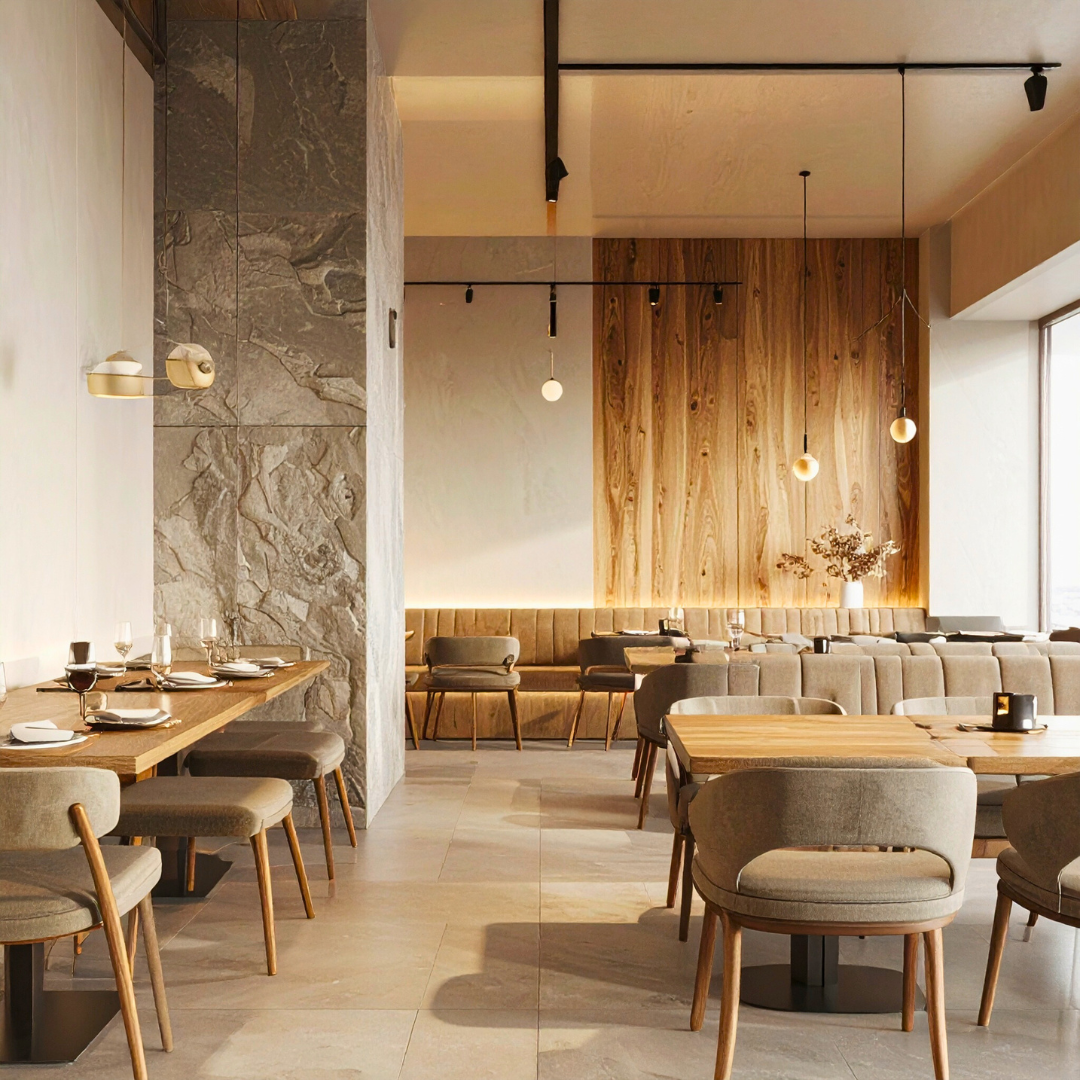
Material selection at Blucap Interiors is never about visual drama alone. Stone, wood, fabric, and metal each carry an emotional temperature that subtly shapes comfort and appetite. Cooler, reflective surfaces heighten alertness, while warmer, tactile finishes invite ease and indulgence.
Rather than relying on excess, material palettes are developed with balance and honesty. When materiality is carefully calibrated, the space supports the cuisine instead of competing with it, allowing food and conversation to remain central.
Why Great Restaurants Are Felt Before They Are Tasted
What ultimately defines a refined dining experience for us at Blucap Interiors is intention rather than spectacle. The spaces we design are never meant to shout. Proportions steady the body. Light calms the mind. Spatial rhythm prepares the senses.
By the time food arrives, guests are already receptive. They may not consciously recognise the role the environment has played, yet they leave convinced that the meal was exceptional. This is the invisible architecture of appetite—where space becomes an unspoken ingredient in the dining experience.
For us, this philosophy defines restaurant and café design at its highest level. We design environments not merely to be seen, but to be felt—quietly shaping perception, enhancing taste, and leaving behind a lasting memory. Because food is never experienced in isolation. It is experienced through space—and that space becomes part of the menu.
 Chat with us now!
